
Integrated Drive Modules vs. Standalone Gearboxes: An AMR Procurement Guide
Compare integrated drive modules and standalone AMR gearboxes with TCO, sourcing-risk, safety, and RFQ checks. Request drivetrain sizing support today.
For procurement teams and engineering managers at Autonomous Mobile Robot (AMR) OEMs, the AMR gearbox sourcing strategy often boils down to a critical "build vs. buy" decision: Should you source standalone gearboxes and assemble the drivetrain in-house, or purchase pre-assembled Integrated Drive Modules (IDMs)?
This decision impacts not just the initial Bill of Materials (BOM) cost, but also assembly lead times, supply chain resilience, and Total Cost of Ownership (TCO).
Reviewed: July 18, 2026. Scope: global indoor AMR and AGV wheel-drive procurement where the buyer is choosing between a complete drive module and a gearbox-led in-house assembly. This guide is a procurement and engineering screening aid, not a legal compliance opinion. Confirm final safety, noise, duty-cycle, and regional conformity claims against the exact robot design and supplier test evidence.
Need a fast second look at your drivetrain package? Contact AMRGearbox engineering with your wheel diameter, payload, slope, speed, brake, and volume targets.
1. Defining the Approaches
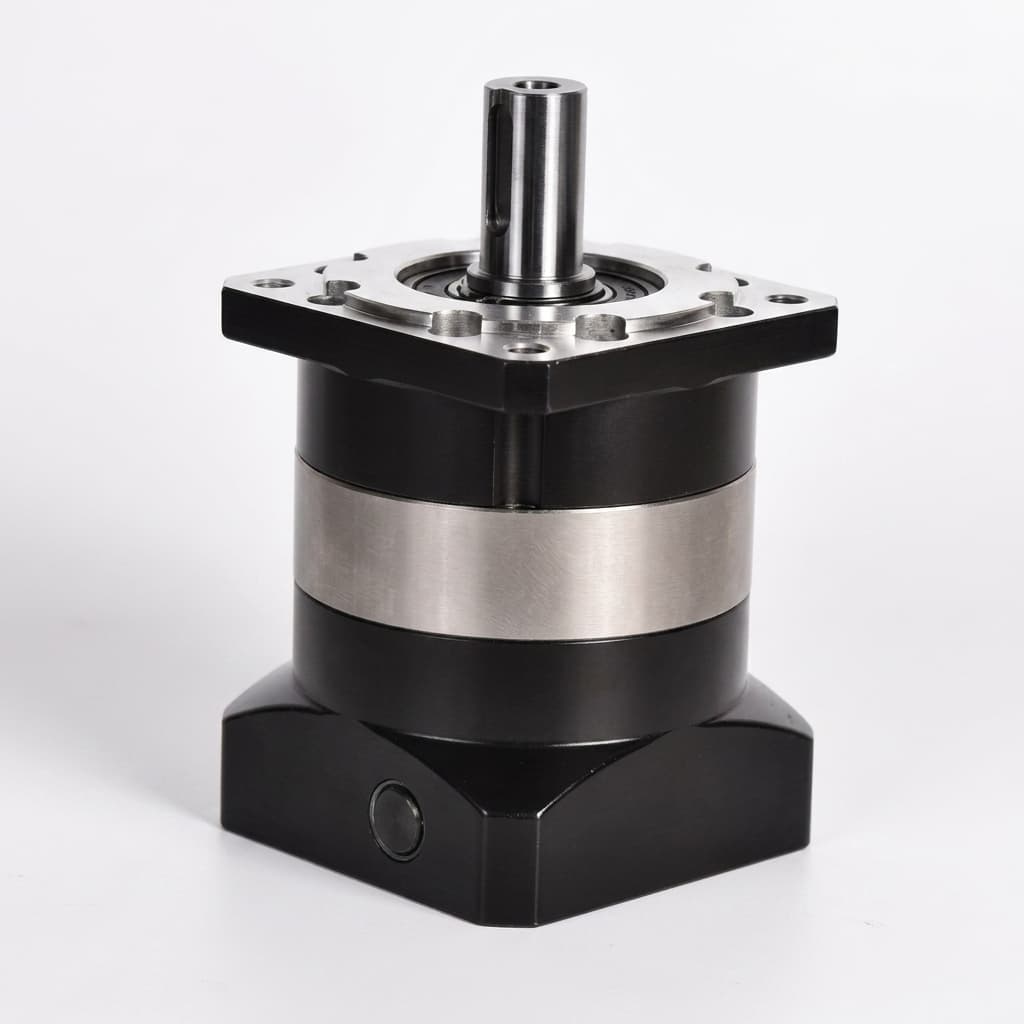
Standalone Gearboxes: Purchasing the precision gearbox (usually planetary or cycloidal) independently from the BLDC motor, encoder, brake, and wheel. The OEM handles integration.
Integrated Drive Modules (IDM): Purchasing a "plug-and-drive" unit where the manufacturer has pre-assembled and matched the motor, gearbox, safety brake, and often the wheel hub into a single, sealed unit.
2. Head-to-Head Comparison: IDM vs. Standalone
To evaluate the financial and engineering impacts, we must look beyond the unit price.
| Procurement Factor | Integrated Drive Module (IDM) | Standalone Gearbox (In-house Assembly) |
|---|---|---|
| Initial Unit Cost | Higher (Includes all components & labor) | Lower (Just the gearbox and raw parts) |
| Assembly Time per Robot | < 15 minutes (Plug-and-play) | 1–3 hours (Motor mating, brake alignment) |
| Vendor Management | Single supplier (1 SKU) | Multiple suppliers (4–6 SKUs) |
| Customization Flexibility | Low to Moderate (Pre-set configurations) | High (Mix and match optimal components) |
| Maintenance & Swaps | Fast (Swap whole module, high cost) | Slower (Repair individual parts, lower cost) |
| Lead Time Risk | High (If one sub-component is delayed) | Moderate (Can source motors/gearboxes separately) |
| Safety Evidence Scope | Cleaner module-level data package, but still needs robot-level validation | OEM must align brake, encoder, controller, and gearbox evidence |
Note: Sourcing standalone components allows for multi-sourcing, reducing the risk of a single point of failure in the supply chain. However, it shifts the burden of quality control onto the OEM's assembly line.
3. TCO and Hidden Costs
When calculating TCO, procurement teams often overlook the hidden costs of integration. Mating a high-speed BLDC motor to a precision planetary gearbox requires exact alignment. Misalignment by even a fraction of a millimeter can induce radial loads on the input shaft, causing premature bearing stress and increased noise (NVH).
For a first-pass RFQ comparison, do not compare the IDM catalog price against the bare gearbox price. Compare the installed drivetrain cost:
Installed drivetrain cost = unit price + adapter/coupling parts + assembly labor + end-of-line test labor + rework allowance + spare strategy + downtime exposure
Use the same duty cycle, wheel load, and service interval assumptions for both options. A standalone gearbox can win at scale when the OEM has controlled assembly fixtures and test capacity; an IDM can win when schedule, field swap time, or safety-evidence ownership is the bigger risk.
4. Procurement Checklist: Which Strategy is Right for You?
Use this checklist to align your engineering and purchasing departments:
- Volume: Are you building 50 units a year or 5,000? (High volume often justifies in-house standalone assembly).
- Engineering Bandwidth: Do you have the internal QA capacity to test motor-gearbox mating and encoder calibration?
- Form Factor: Does your chassis require a unique right-angle configuration that standard IDMs don't support?
- Service Level Agreements (SLAs): Do your end-users require field-swappable drive units to minimize downtime?
- Supply Chain Diversity: Are you comfortable relying on a single vendor for the entire drive unit?
- Evidence Ownership: Who owns brake torque validation, bearing-life assumptions, noise test conditions, encoder calibration, and change-control notices after supplier nomination?
If your team is still defining the wheel-drive baseline, pair this procurement matrix with the 24V AMR gearbox selection workflow, compare planetary gearbox options, review cycloidal reducer options, and use the gearbox efficiency impact guide plus noise testing resource before final RFQ scoring.
5. Frequently Asked Questions (FAQ)
Are Integrated Drive Modules more efficient than standalone combinations?
Not inherently. The efficiency comes from the components used (e.g., a 95% efficient planetary gear coupled with a high-efficiency BLDC motor). However, factory integration ensures perfect alignment, eliminating friction losses caused by poor in-house assembly.
Can I mix and match motors with a standalone gearbox?
Yes, this is the primary advantage of standalone gearboxes. Many manufacturers offer IEC, NEMA, or custom adapter flanges to fit servo, stepper, and BLDC motors, but the OEM must still verify pilot fit, shaft load, coupling stiffness, encoder alignment, and thermal derating.
How does ISO 3691-4 affect this decision?
Do not assume a gearbox quote closes ISO 3691-4 safety evidence. With standalone components, the AMR OEM owns the evidence chain for brake, encoder, controller, and mechanical transmission behavior in the final vehicle. With an IDM, the supplier may simplify the module evidence package, but the robot integrator still validates the complete truck and its operating context.
6. Next Steps for AMR OEMs
Whether you opt for maximum flexibility with standalone planetary and cycloidal gearboxes, or prefer the simplicity of a fully integrated module, ensuring component quality is paramount.
Our engineering team provides both high-precision standalone gearboxes with customizable input flanges, and bespoke integrated drive solutions tailored to your chassis.
Ready to optimize your drivetrain BOM? Contact our application engineers for a detailed torque analysis and pricing comparison.
Sources & References
Frequently Asked Questions
Are integrated drive modules more efficient than standalone gearbox combinations?
Not inherently. Efficiency depends on the selected motor, gearbox, seals, bearings, and operating point. Factory integration can reduce alignment-related friction and noise risk, but buyers should compare supplier test data under the same duty cycle.
When does a standalone AMR gearbox make more sense?
Standalone gearboxes make more sense when the OEM has fixture-controlled assembly, end-of-line test capacity, unique packaging constraints, and enough volume to recover integration labor and validation cost.
How should ISO 3691-4 affect the sourcing decision?
It should define evidence ownership. Standalone sourcing leaves the OEM responsible for aligning brake, encoder, controller, and drivetrain evidence in the final vehicle. An IDM can simplify the module evidence package, but robot-level validation remains the integrator responsibility.
Author
Categories
Need an AMR Gearbox Recommendation?
Reference this article and share your constraints. Our team replies via [email protected].
More Posts
OEM Gearbox Customization Checklist for AMR Startups
OEM gearbox customization playbook for AMR startups. Timeline templates, NRE cost models, and validation gates from EVT to SOP.

AMR Gearbox RFQ Template: Copy-Ready Structure for Technical Evaluation
Copy-ready AMR gearbox RFQ template with scoring model, compliance matrix, and red-flag questions for faster supplier evaluation.
BLDC Motor + Planetary Gearbox Sizing for AMR Wheel Drives
Step-by-step BLDC motor and planetary gearbox sizing for AMR wheel drives. Includes formulas, worked examples, and thermal analysis.